Sensor
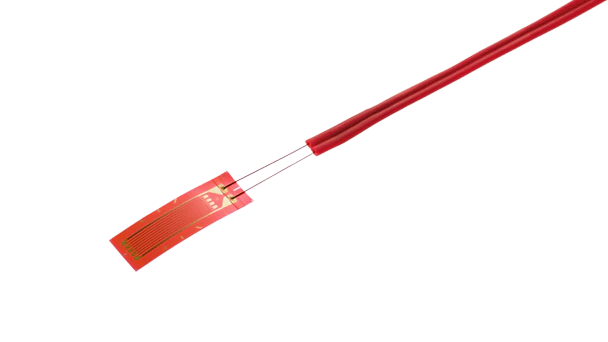
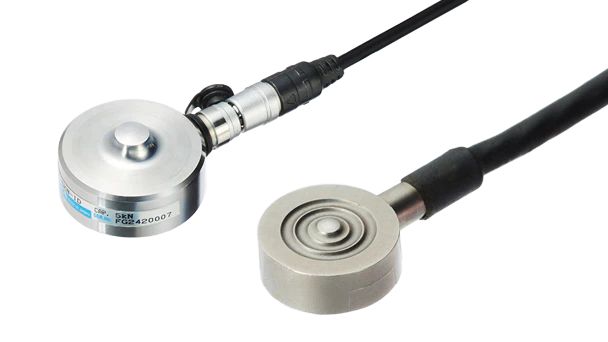
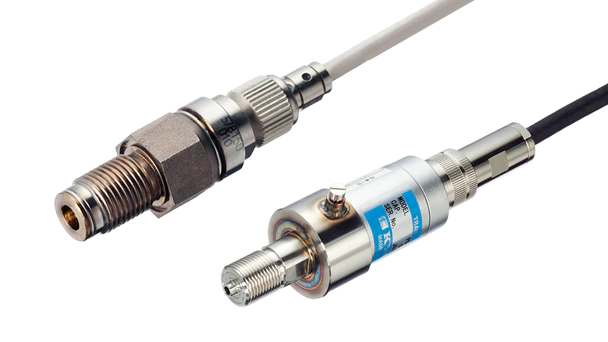
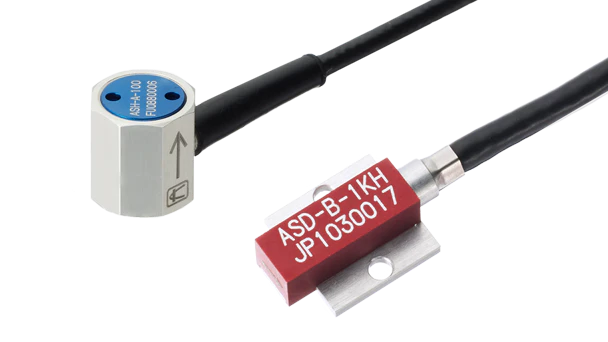
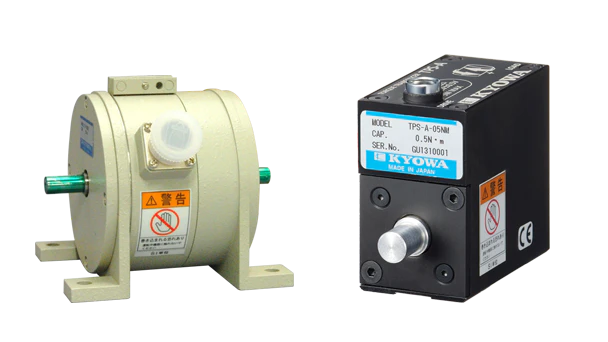
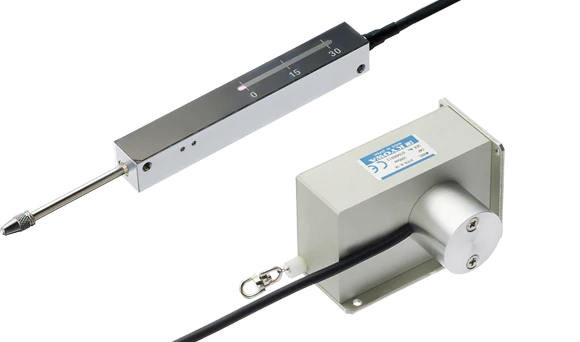
There are two major types of KYOWA sensors. The first type is strain gages, which detect slight mechanical changes (strain) as electrical signals. The second type is strain gage sensors (transducers), which make use of strain gages to convert physical quantities (such as load, force, pressure, acceleration, vibration, displacement, or torque) into electrical signals. Kyowa was the first company in Japan to produce and sell strain gages domestically, in 1951. Strain gages are used in a wide range of industries and fields, including moving objects such as machinery and vehicles, electricity, appliances, civil engineering construction, medical, and food products. Strain gage sensors (transducers) are also used for a wide variety of purposes, from research and development to production site work.
Strain Gages
Strain gages make use of the fact that electrical resistance changes as a metal deforms. Generally speaking, the amount of electrical resistance of a metal is in inverse proportion to the cross section and is proportional to the length. When a metal wire is pulled, its cross section decreases and its length increases, which increases electrical resistance. When it is compressed, its electrical resistance is reduced. Elongation or shrinkage proportionally changes the electrical resistance of metal with the specific constant. If the metal wire is firmly bonded to the material or structure to measure strain, the metal wire will elongate and shrink along with the structure. The change in electrical resistance can then be measured to determine the elongation or shrinkage (the strain) of the material or structure.
Principles of Strain Gages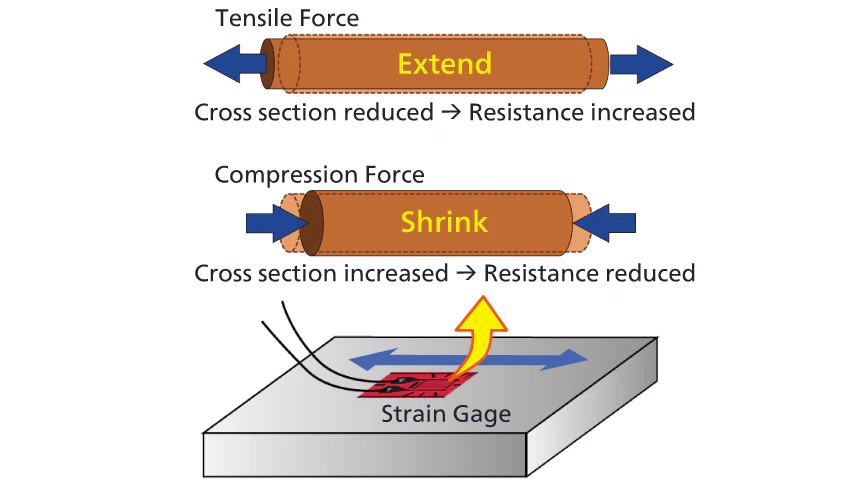
Principles of Strain Gages
Strain Gage Sensors (Transducers)
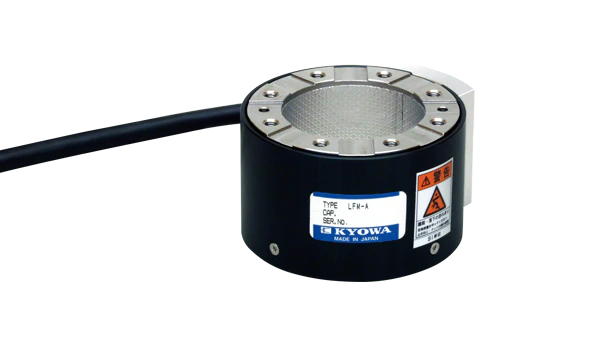
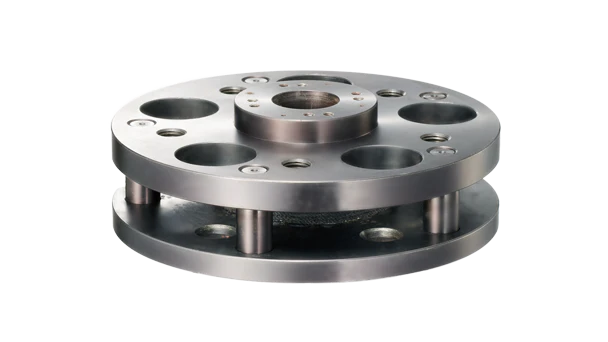
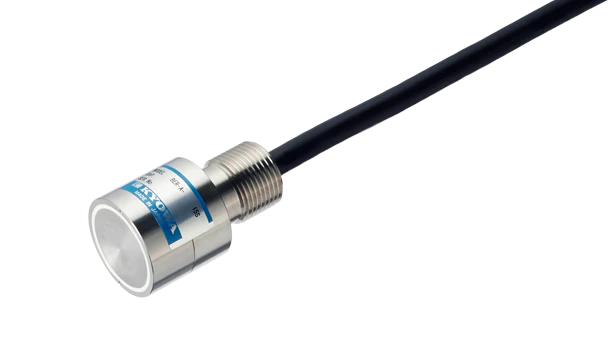
Strain gage sensors convert various physical quantities into electrical signals. They are sometimes called transducers, because they convert a physical quantity (such as force, pressure, or acceleration) or strain acting on the strain generating part into an electrical signal. The strain generating part converts an external physical quantity into mechanical strain that can be detected by the strain gage. For example, a load cell is a type of sensor that measures load, and the strain generating part of this device is shaped like a metallic beam or column. This beam deforms slightly when a load is applied, and this deflection (strain) is detected by the strain gage. The output of a strain gage sensor is the output of the strain gage, and so it must be converted into a physical quantity.
Conversion of Strain Quantities (Voltage) Measured by Sensors into Proper Physical Quantities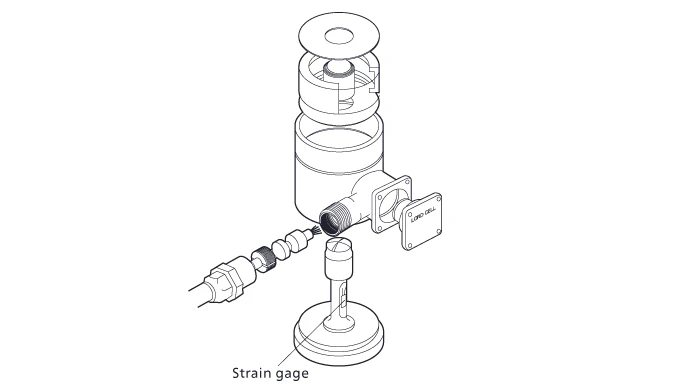
Typical Structure of Load Cells
Relations between Sensor’s Rated Output in Voltage and in Strain Value
Lineup
Category
Please feel free to consult us first.
Please feel free to contact us if you have any problems with measurements or if you have questions about our products.
Product
Here are products that support all measurement scenarios, such as strain gages, sensors, and measuring instruments.
Please feel free to contact us if you have any problems with measurements or if you have questions about our products.
Product
Here are products that support all measurement scenarios, such as strain gages, sensors, and measuring instruments.


