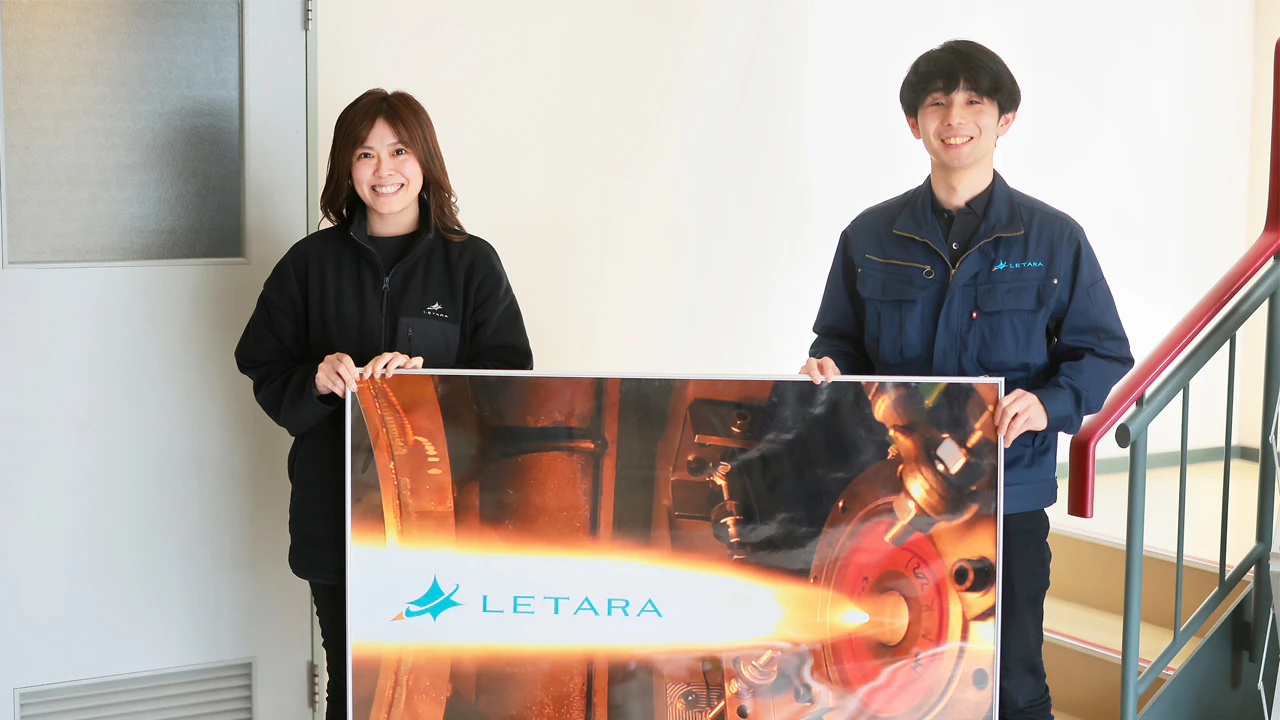
Letara Ltd.
To realize Letara's goal of fast and safe space travel, Kyowa's products play an important role in their propulsion tech.
There is a company in Sapporo, Hokkaido that aims to make it possible for people and things to travel freely in outer space, and that plans to develop cutting-edge technology. That company, from Hokkaido University, is called Letara Ltd. The company's research and development work is supported by strain gages and other products from KYOWA. We spoke with Letara engineer Sho Suzuki on the present and future of Letara, and on how KYOWA products are being put to use there.
"Hybrid chemical propulsion" technology that is powerful, safe, and inexpensive
Please tell us about the kind of work Letara Ltd. does.
Suzuki: Letara Ltd. is a startup that was launched in June 2020 from Hokkaido University. Our mission is summed up by our slogan, "Any place in space within 24H." We research and develop propulsion systems, which are engines for rockets, satellites, and other systems. In 2024, we were selected as a "Deep Tech Startup (J-Startup)," which is given to leading startups in Japan by the Ministry of Economy, Trade and Industry. An airplane can fly anywhere around the world, right? Just like that, we want to make it possible for people and things to travel freely through outer space. In order to do that, we need to develop propulsion devices that are practical in terms of safety, costs, and thrust performance. That's why we're developing what we call "hybrid chemical propulsion" technology, which is powerful, safe, and inexpensive.
Normally, a form of electric propulsion, such as an ion thruster, or liquid chemical propulsion using liquid fuel is used as the propulsion device of a satellite. Electric propulsion is comparatively safe, but movement takes time since it has only around one-hundred-thousandth the thrust of liquid chemical propulsion. Liquid chemical propulsion provides high thrust, but it's very dangerous, and it costs a lot to keep things safe. In contrast with these, Letara's hybrid chemical propulsion technology makes use of both solid fuel, such as plastic, and a liquid oxidizer. We can generate high thrust by combusting solid fuel and liquid oxidizer, and solid fuel like plastic is essentially non-toxic, non-flammable, and non-explosive. This results in a chemical propulsion technology that's safe, powerful, and relatively inexpensive.
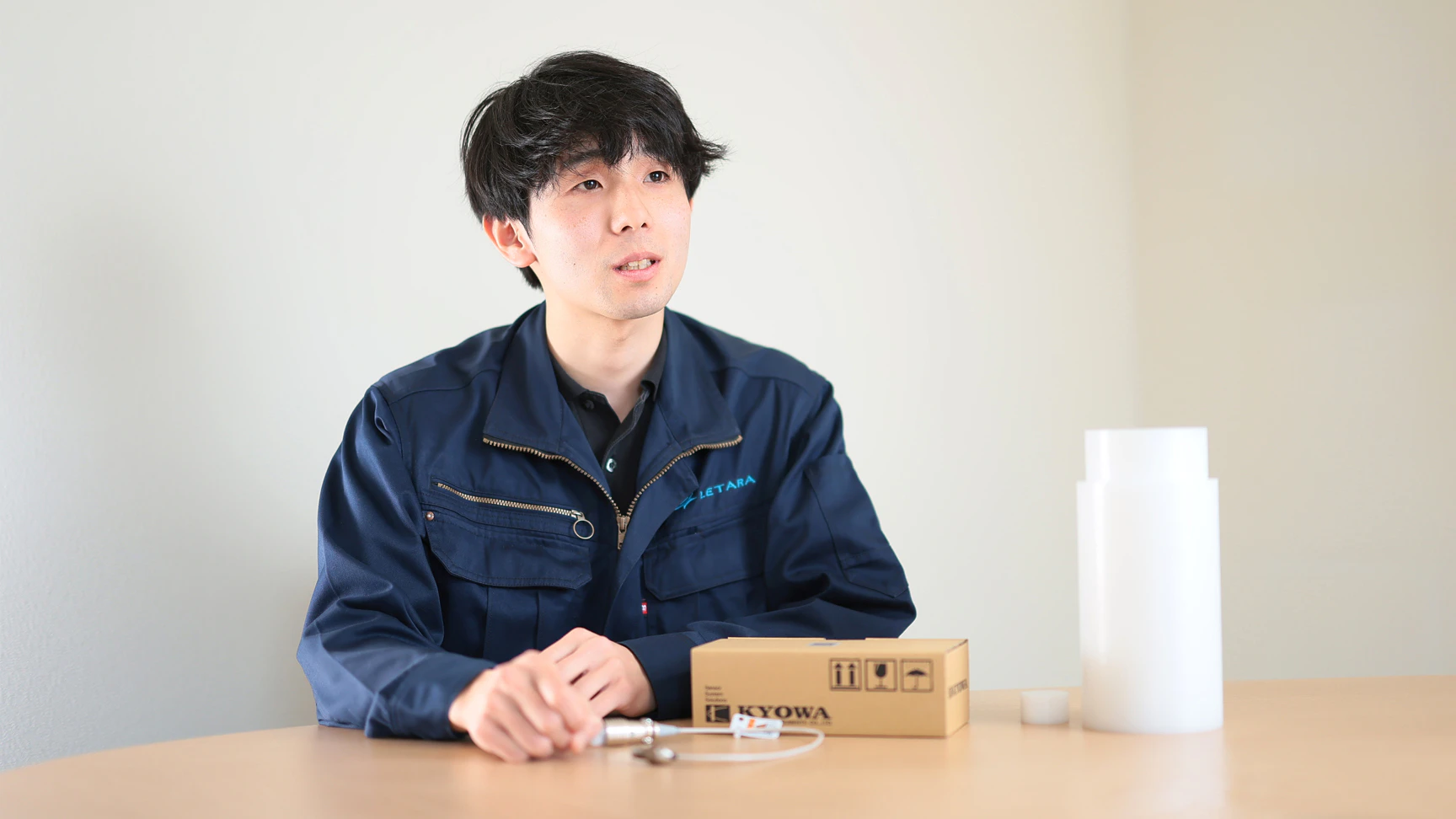
Sho Suzuki: Propulsion Engineer at Letara Ltd.
How is KYOWA involved in Letara's research and development?
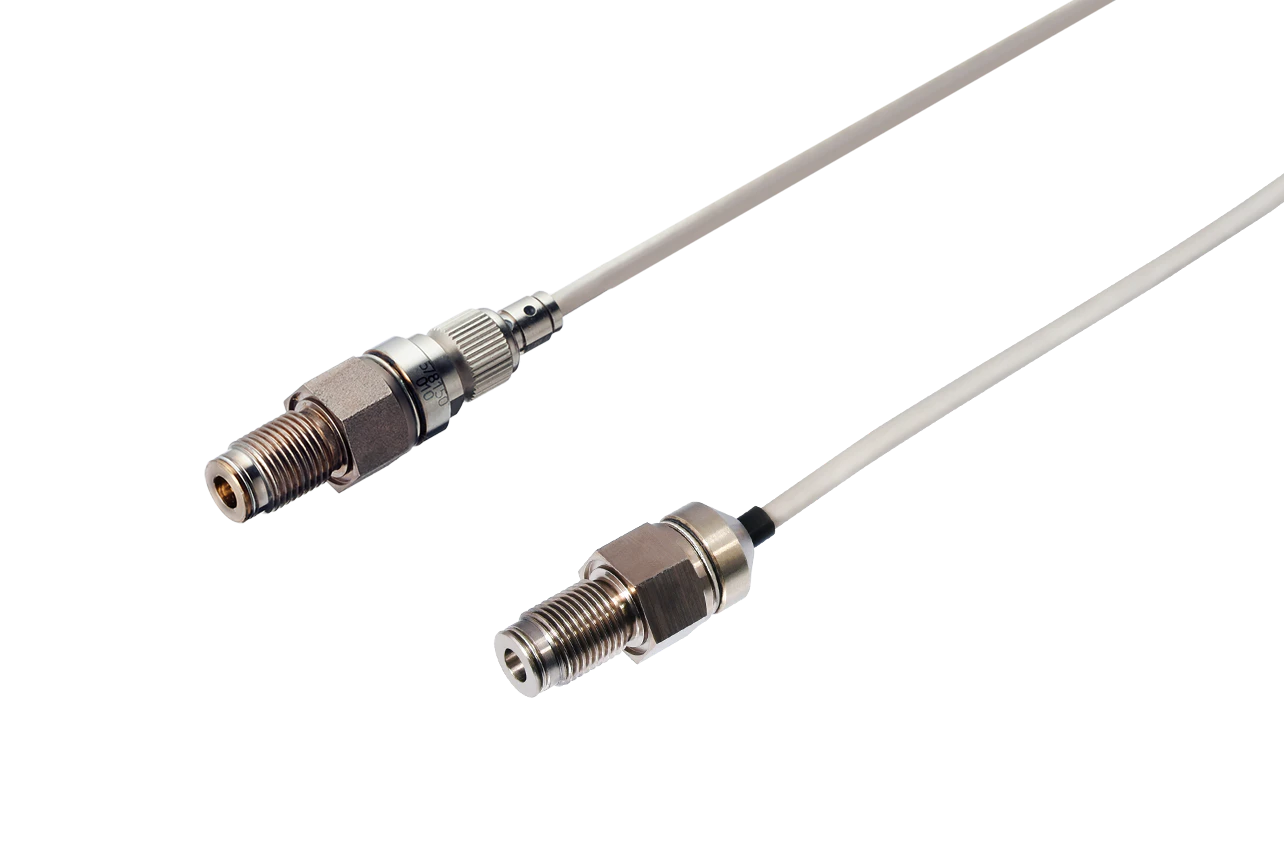
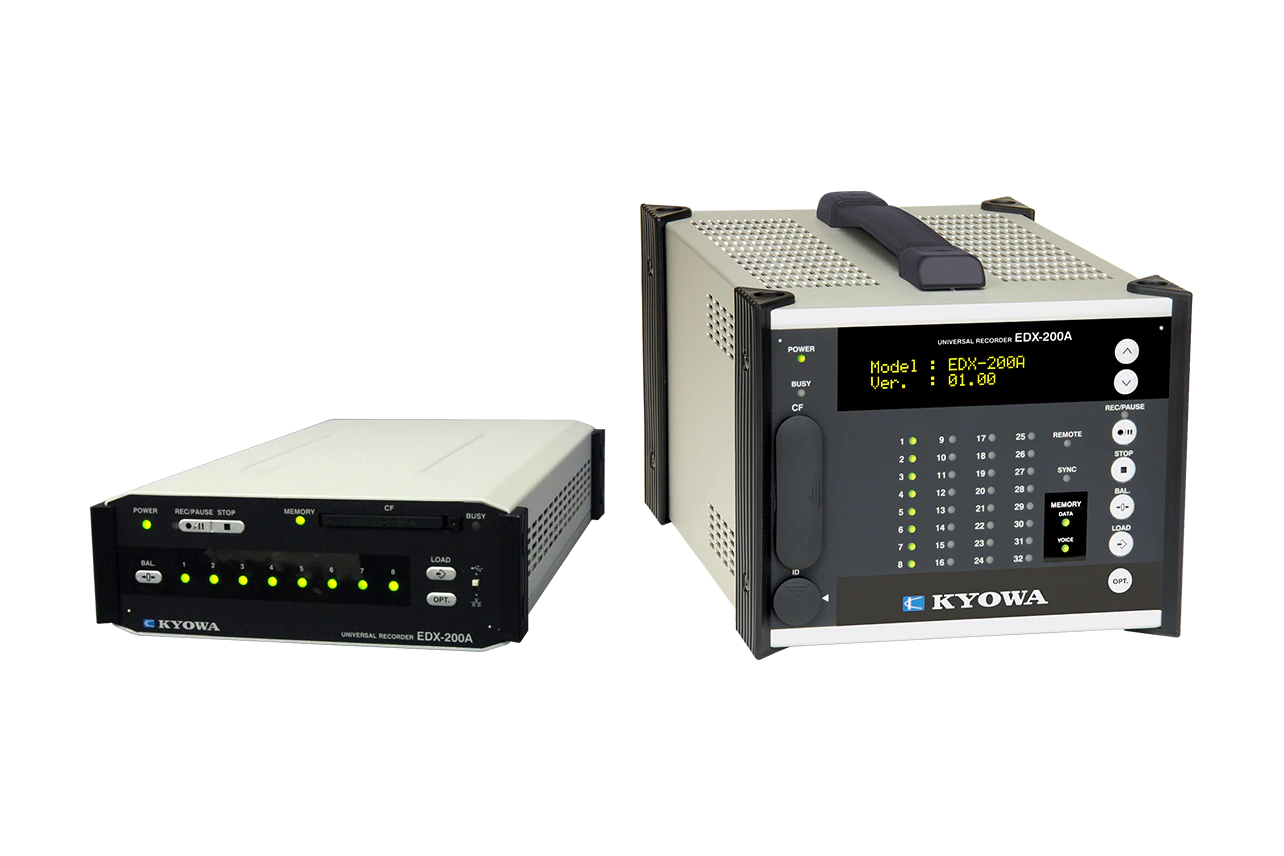
Suzuki: We use KYOWA products during experiments and verification work. For example, we use strain gages, "PHL-A" pressure transducers that can withstand high and low temperatures, "EDX-200A" data loggers to record measurements, and load cells to measure how much power an engine generates during firing. As I mentioned earlier, we're a startup from Hokkaido University, and the university uses a lot of KYOWA products in its research labs. It just seemed natural for us to continue using KYOWA products for our experiments and verification work.
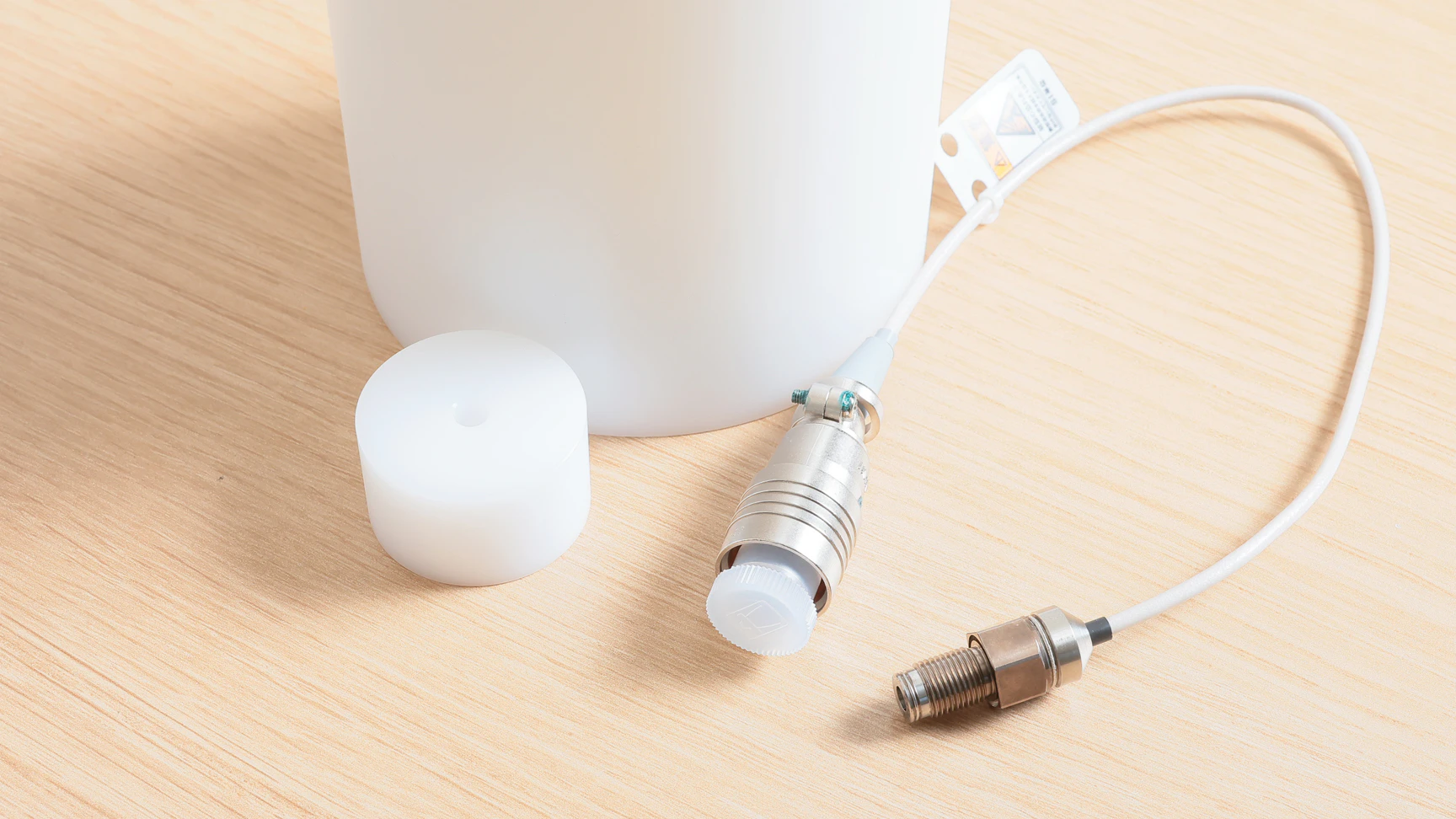
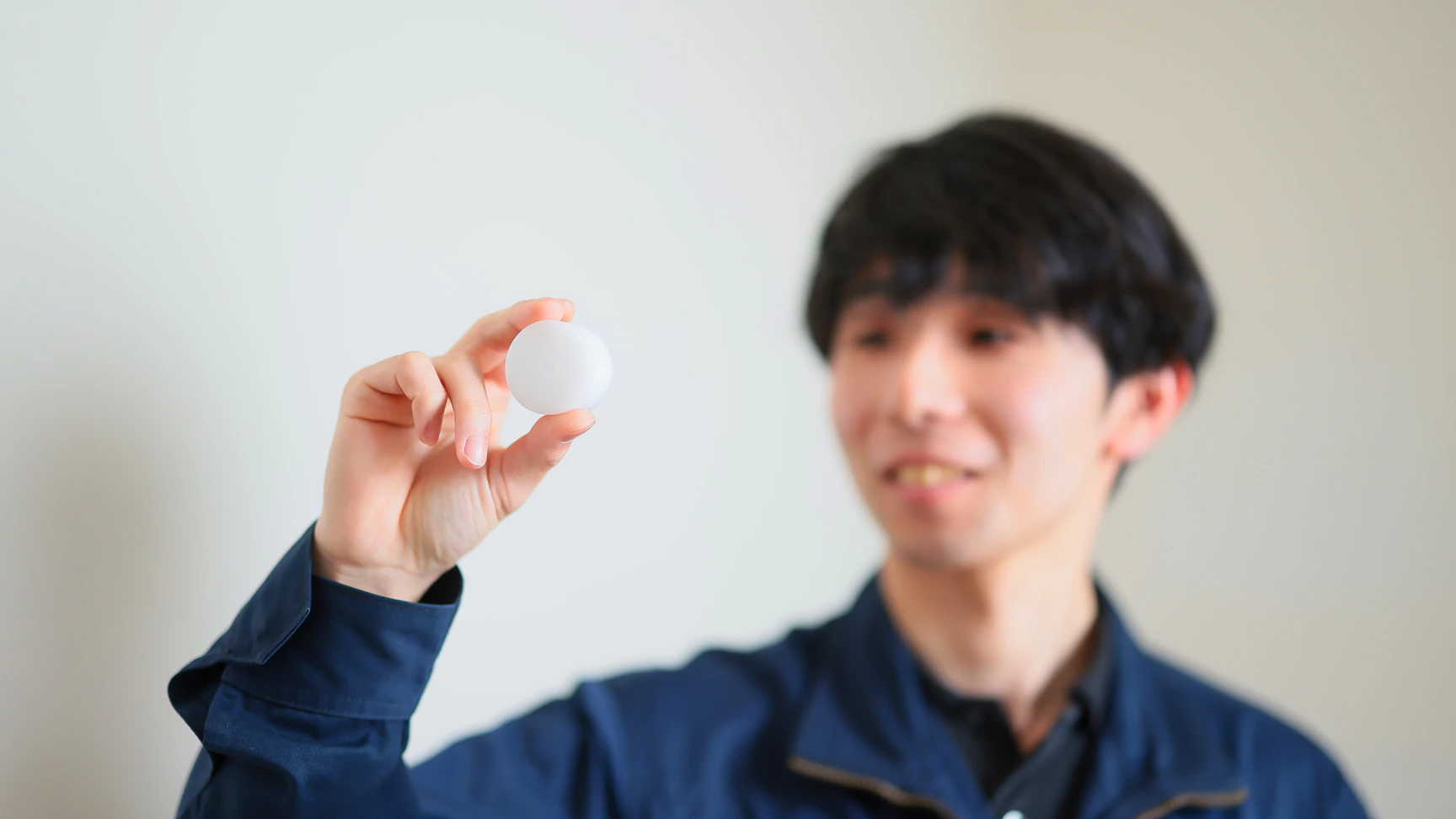
HDPE (hybrid rocket fuel) and PHL-A-B (pressure transducer)
From hardware performance to software that is easy to use... Extremely pleased with the high level of design and craftsmanship
How are KYOWA products in terms of performance and ease of use?
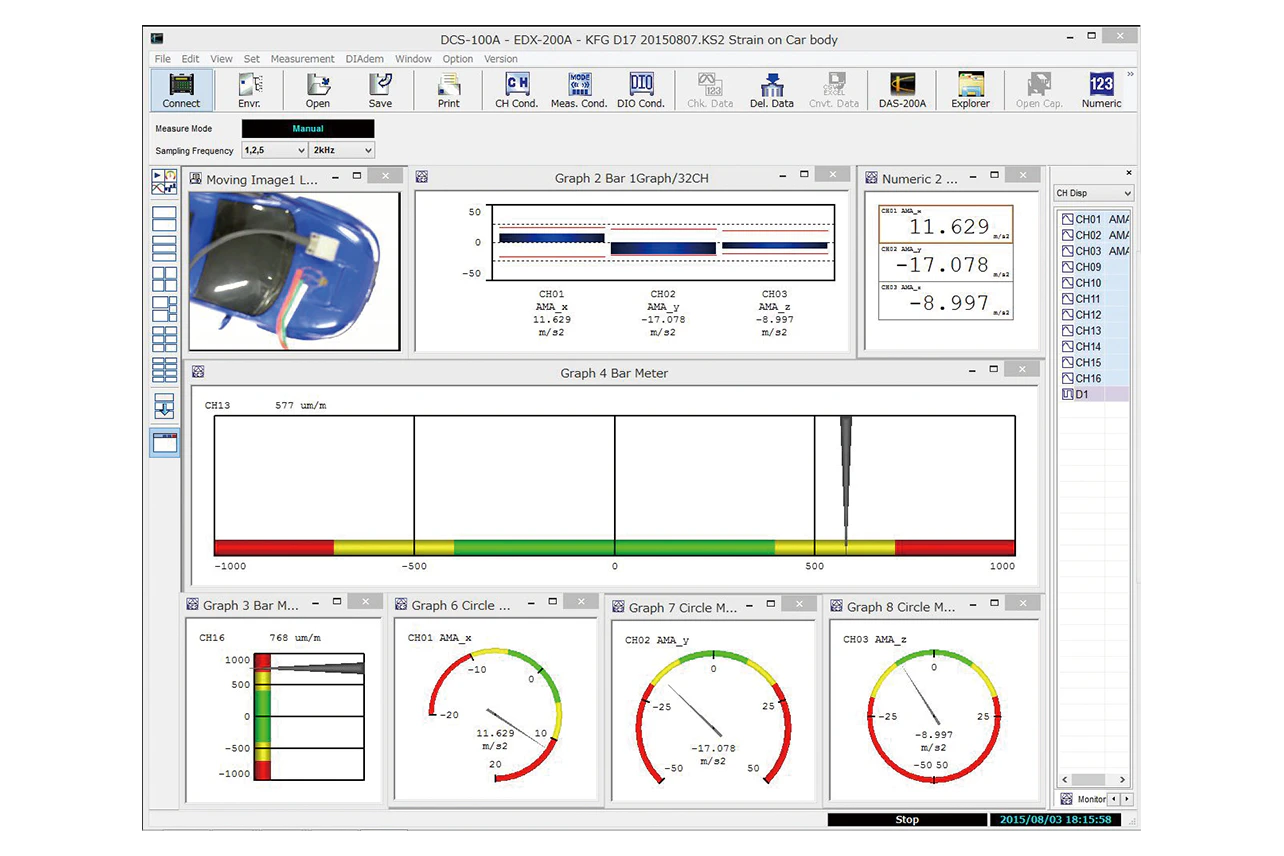
Suzuki: They definitely meet our requirements for measurement accuracy. It's no exaggeration to say that KYOWA is basically the only choice for us. For example, we can't get pressure transducers that are compact and can withstand low and high-temperature environments from anyone else. We also use this software called "DCS-100A" when connecting to our "EDX-200A" data logger to visualize data, and it's very easy to use. When we have to train someone on how to use it, they master it in under an hour. It's really done well. Easy to understand, easy to use, and intuitive. It's perfect.
Are you satisfied with the support you receive from KYOWA?
Suzuki: KYOWA representatives often visit us at work, and this gives us the opportunity to tell them directly about our needs and concerns, such as requesting them to do something differently or asking if something might be possible. Of course, some of our requests aren't possible. But I cannot recall KYOWA ever simply refusing a difficult request without spending some time looking into it. They really do listen to us and always respond flexibly, such as proposing a different way of accomplishing something or introducing us to a product that might work for us. It's the same with the software I mentioned earlier. A representative will come to visit us and show us how to use new functions or explain operations. We're extremely satisfied with KYOWA products, and that includes performance, ease of use, and after-sales support. I truly believe that our research and development work would simply not be possible without KYOWA.
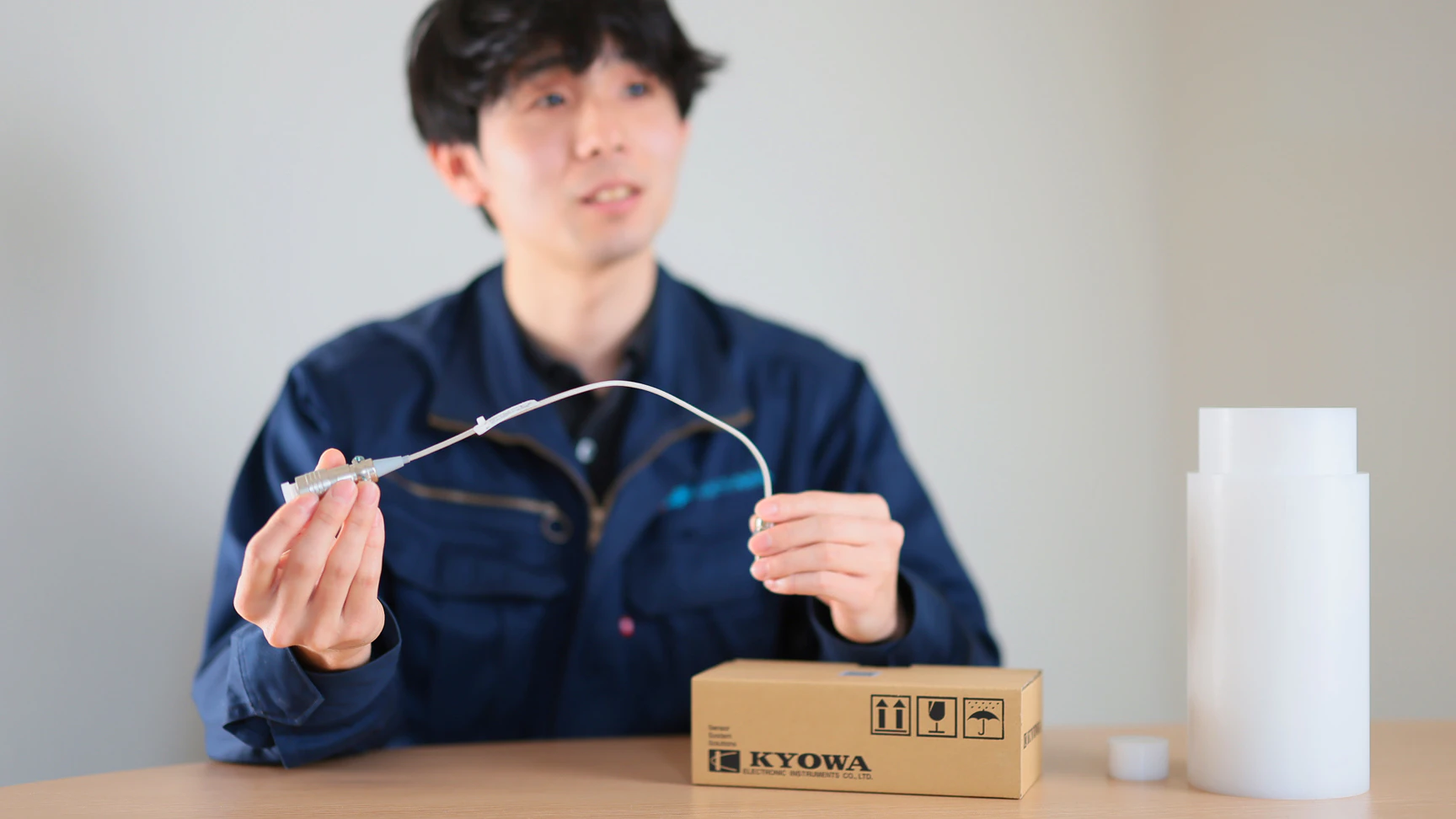
Achieving further technological innovation, together with KYOWA
What does the future hold?
Suzuki: More and more satellites are being launched each year, and I think that we'll have more opportunities to go to space. When that time comes, the most important thing will be safety. Currently, we can generate enough thrust for both widely used solid-fuel rockets and liquid-fuel rockets, but there are problems with safety. If we can replace these with our safe propulsion systems, movement from Earth to space and through outer space would become safer. We're reaching the point where we'll soon be able to conduct in-orbit demonstration testing.
At that point, we'll need even smaller transducers from KYOWA. Rocket engines will become more compact, so we'll need smaller transducers that can be used in low and high temperatures. It's truly a joy every day researching and developing cutting-edge technology related to human progress with a longing for space and a sense of adventure. I'm looking forward to continuing to drive technological innovation together with KYOWA.
Related Product
Please feel free to contact us if you have any problems with measurements or if you have questions about our products.


