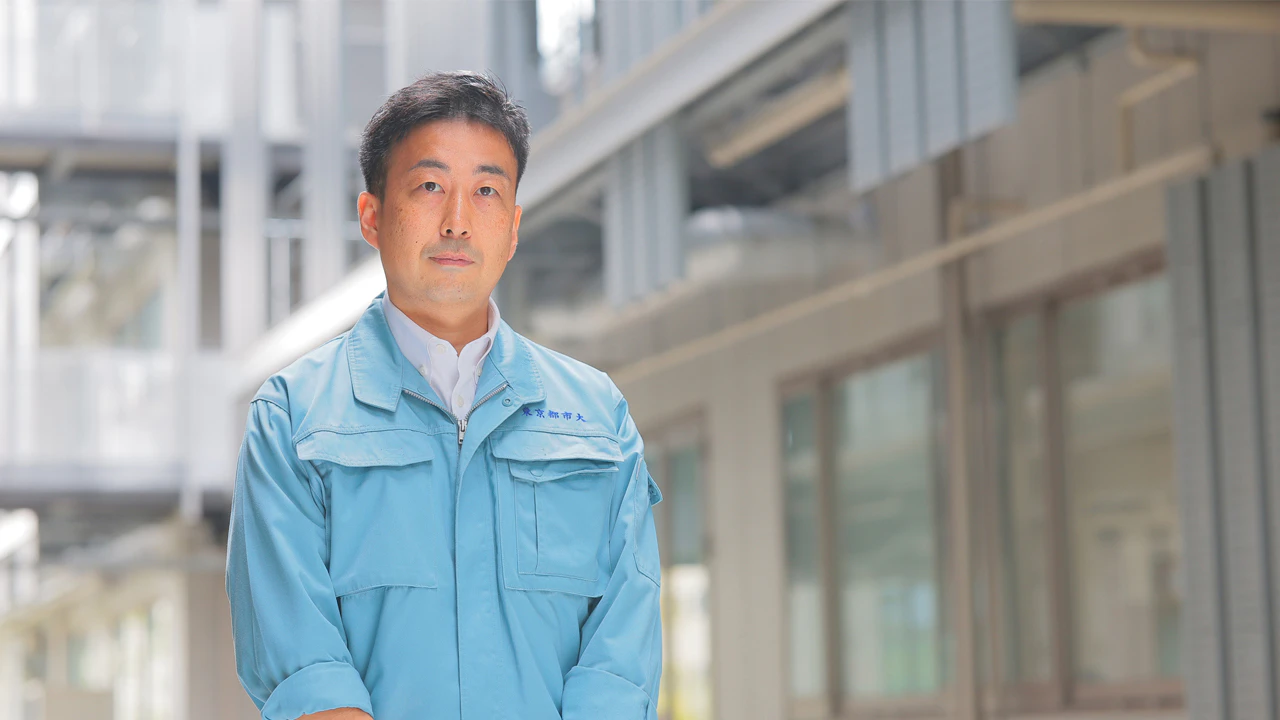
Professor Hidehiko Sekiya, Tokyo City University
Researching maintenance and management techniques for bridges and tunnels Utilizing KYOWA products to serve as a "social infrastructure doctor"
There have been several accidents caused by deteriorated bridges, roads, and tunnels in recent years, and their maintenance and management have become a major challenge. In order to realize a safer and more secure society, Professor Hidehiko Sekiya of the Faculty of Architecture and Urban Design at Tokyo City University continues his research related to monitoring social infrastructure such as bridges, roads, and tunnels. How are KYOWA strain gages and other products being used in Professor Sekiya's research? We delved into this story.
Just like people, structures need "Health Check," too
Please tell us about your research.
Prof. Sekiya: I'm researching the maintenance and management of deteriorated social infrastructure, such as bridges, roads, and tunnels. I guess I'm sort of like a doctor. It's probably easiest to think of me as a social infrastructure doctor.
This involves evaluating the soundness of a structure, such as a bridge, road, or tunnel, by attaching sensors to the structure and analyzing the data I obtain. Then, I determine whether it's doing well or not, like a doctor during a health check. If the structure is not doing well, I figure out why and then I repair or reinforce the damaged areas. From then, I continue to regularly evaluate its condition, for example, after five and ten years. When you go for a health check, the doctor uses sensors to collect data and determine whether you're healthy. It's basically the same for structures like these. I've also been involved in research and development in areas such as disaster prevention, solar power generation, and wireless measuring instruments.
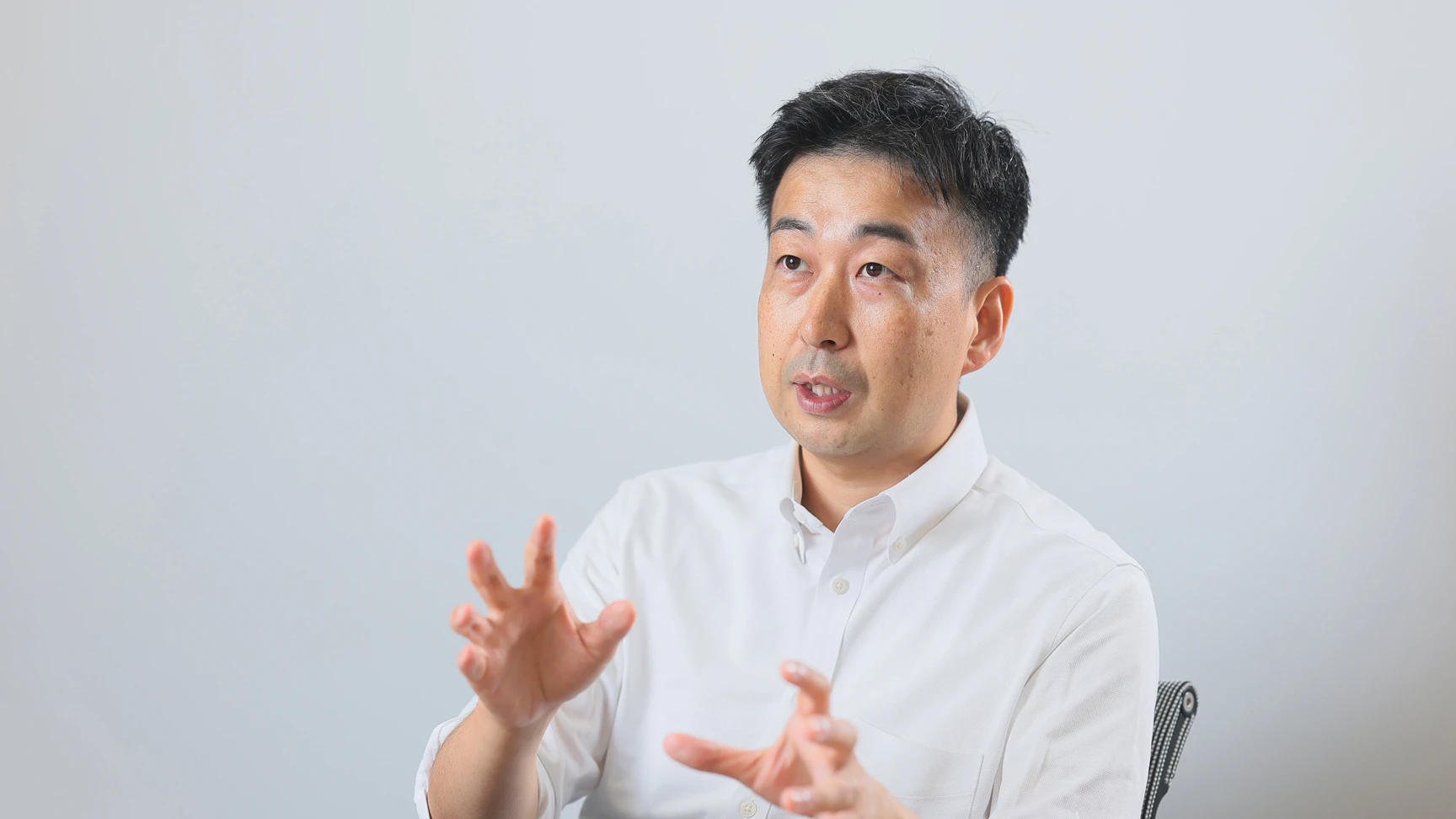
Professor Hidehiko Sekiya, Faculty of Architecture and Urban Design, Tokyo City University
What motivates your research? What do you find rewarding about it?
Prof. Sekiya: I enjoy the process of understanding new things and exploring unknown fields, so I find my work rewarding every day. Of course, it's very rewarding to be able to resolve issues with deteriorated social infrastructure, which is an important social issue. I've always been interested in bridges and wanted to do work related to them, and that's why I chose this field. We've reached the stage where the bridges we build now are mostly perfect, structurally speaking. However, as research in this area has progressed, we've realized that there are still many issues to resolve with regard to maintenance and management.
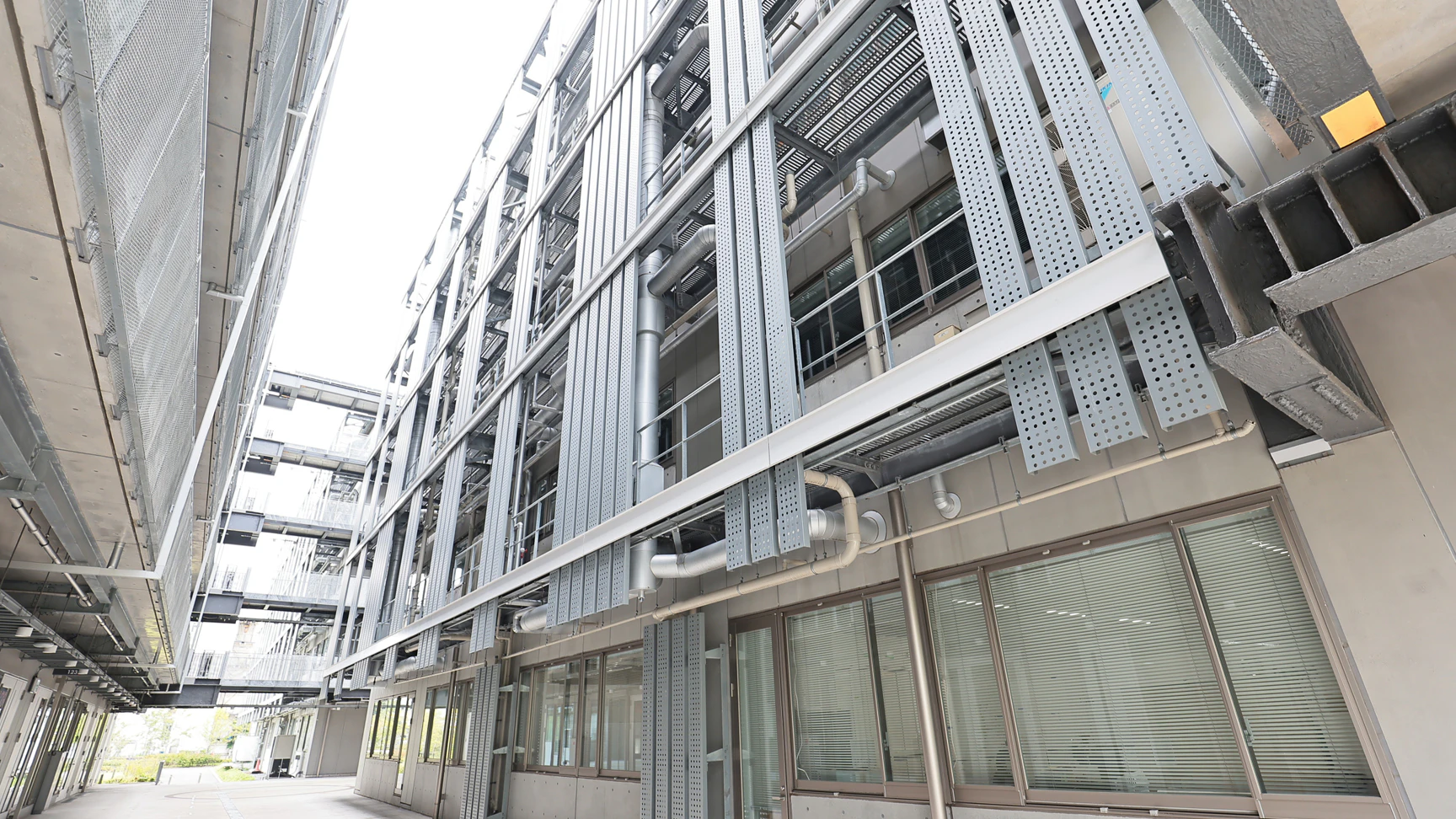
The structures that were built during Japan's period of rapid growth are now around 60 years old. Some of them are in really rough shape. They may have been perfect in terms of design and structure back then, but a not insignificant number of them have begun suffering damage that the designers back then never imagined. That's why I want to realize, through my research, a safer and more secure social infrastructure, even in terms of maintenance and management.
How is KYOWA involved in your research?
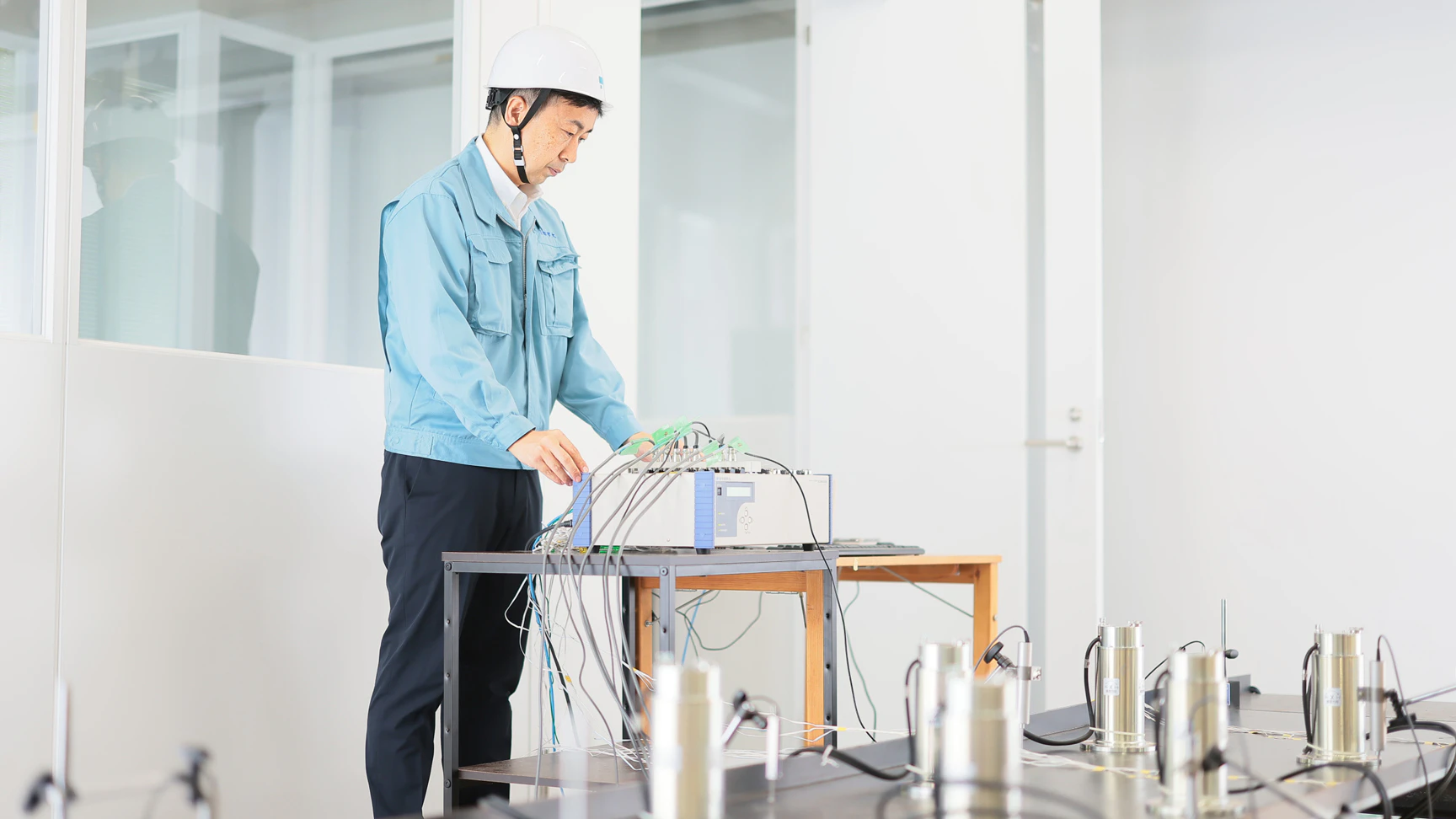
Prof. Sekiya: How do we check if we're healthy? You get your blood pressure and pulse checked, or maybe have an ultrasound done. We use all sorts of methods to determine whether we're healthy or not. Social infrastructure is the same. When checking a structure, it's extremely important to measure the response when an external force is applied and also when no external force is applied. It's crucial to determine the condition of the structure by properly measuring the response in normal circumstances, during earthquake conditions, and when a vehicle or train is traveling over it... in other words, when an external force is being applied. That's why KYOWA's strain gages, accelerometers, displacement transducers, inclination transducers, and other measuring instruments are so very useful.
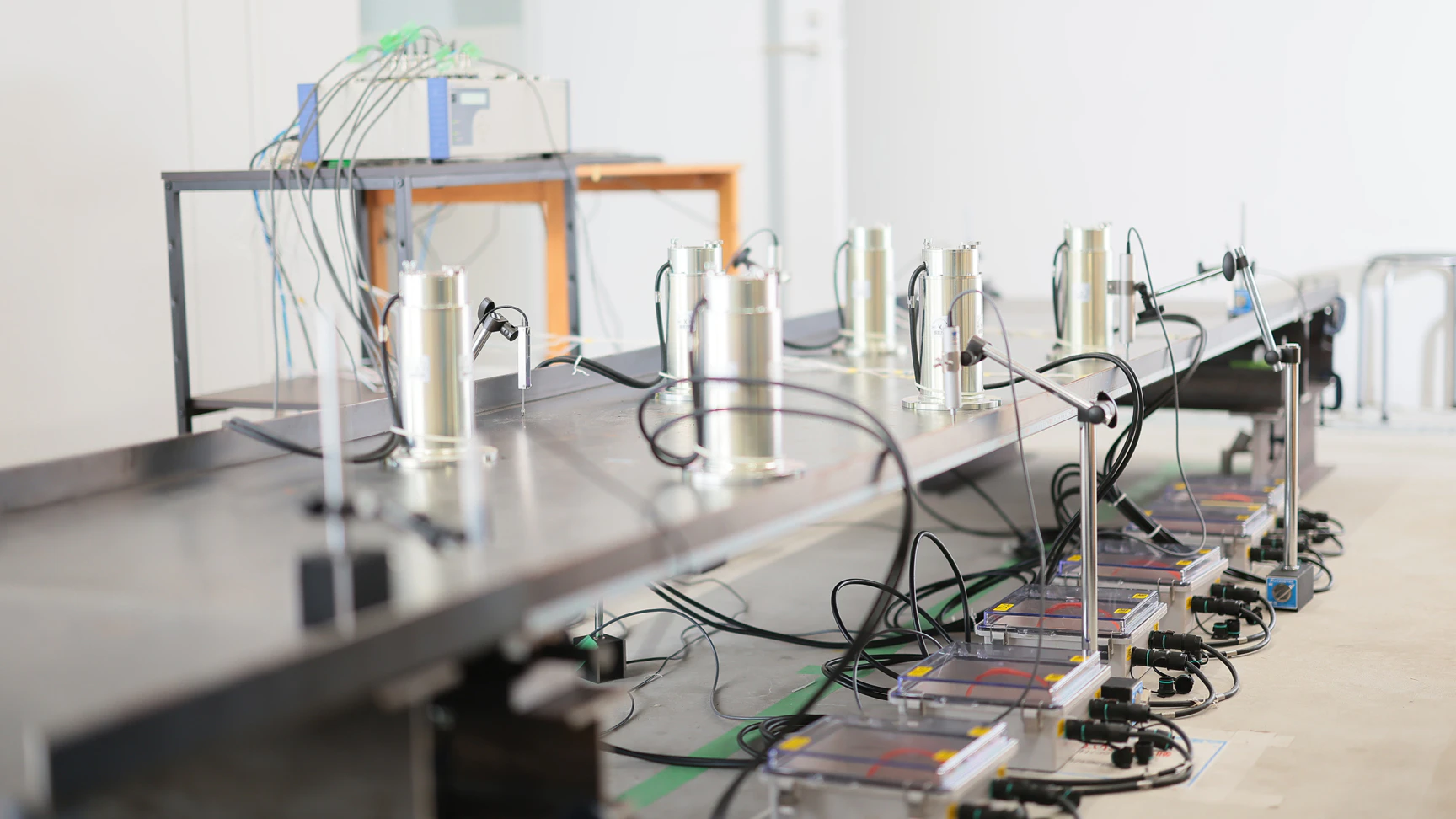
A model of a bridge with inclination transducers and displacement meters
A diverse product lineup and close after-sales support
What attracted you to KYOWA products?
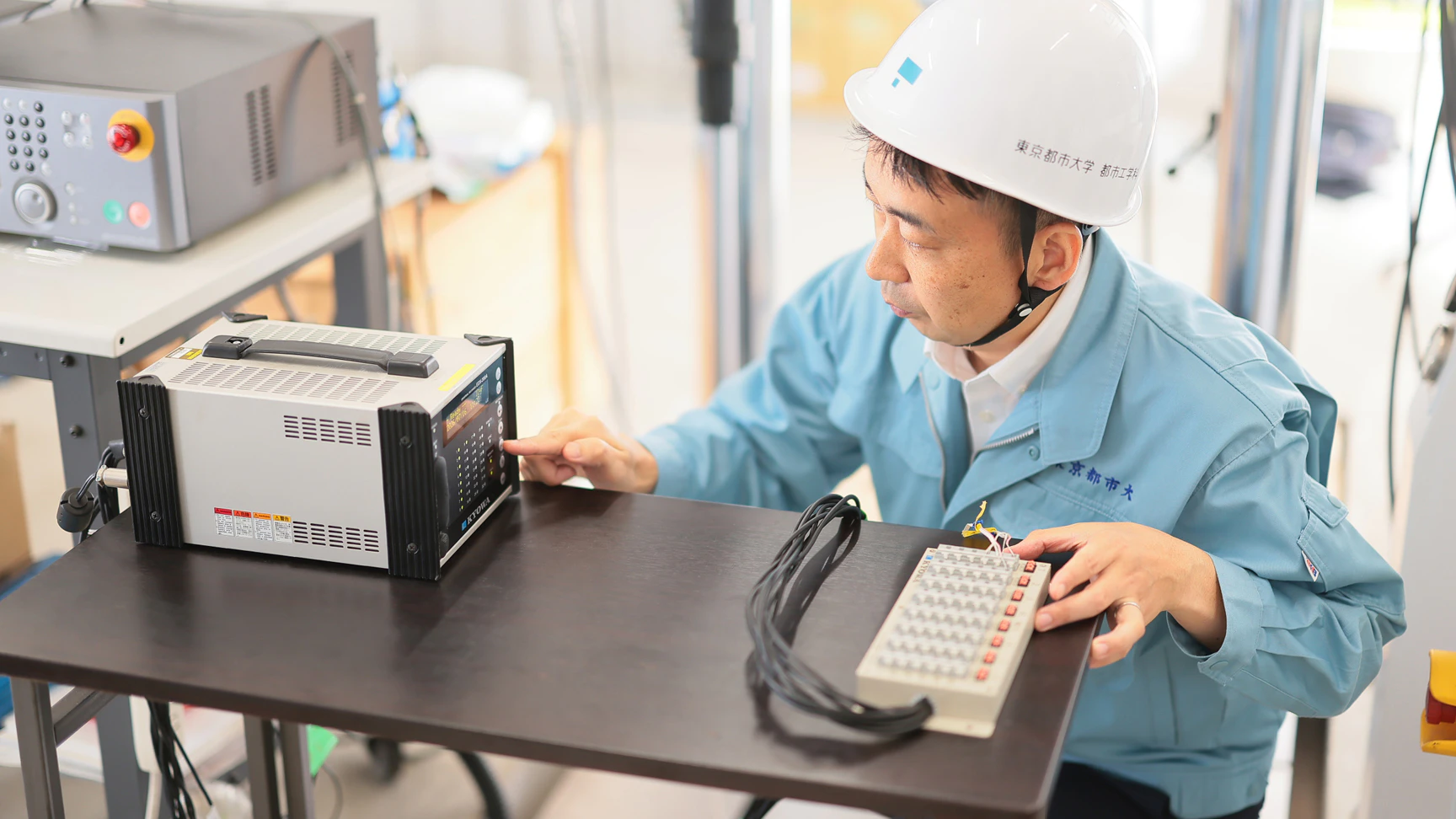
Prof. Sekiya: I first encountered KYOWA measuring instruments when I was a student. I was a member of a research lab researching fatigue on steel structures, and KYOWA products were being used for various experiments. Eventually, I was put in charge of my own research lab, and I naturally ended up using KYOWA products for my measuring instruments. One reason why I went with KYOWA is that the products are easy to use. I don't have to teach the students in my research lab how to use them. They just figure it out as they go along. I think it's great. It's like using a smartphone. They figure it out without even having to look at an instruction manual. I think the user interfaces of these products, such as the data loggers we use to record measurements, are really excellent. Specialized measuring instruments and laboratory instruments can be very complex in design, and we often can't even tell what we need to press to get started.
What do you think are KYOWA's advantages?
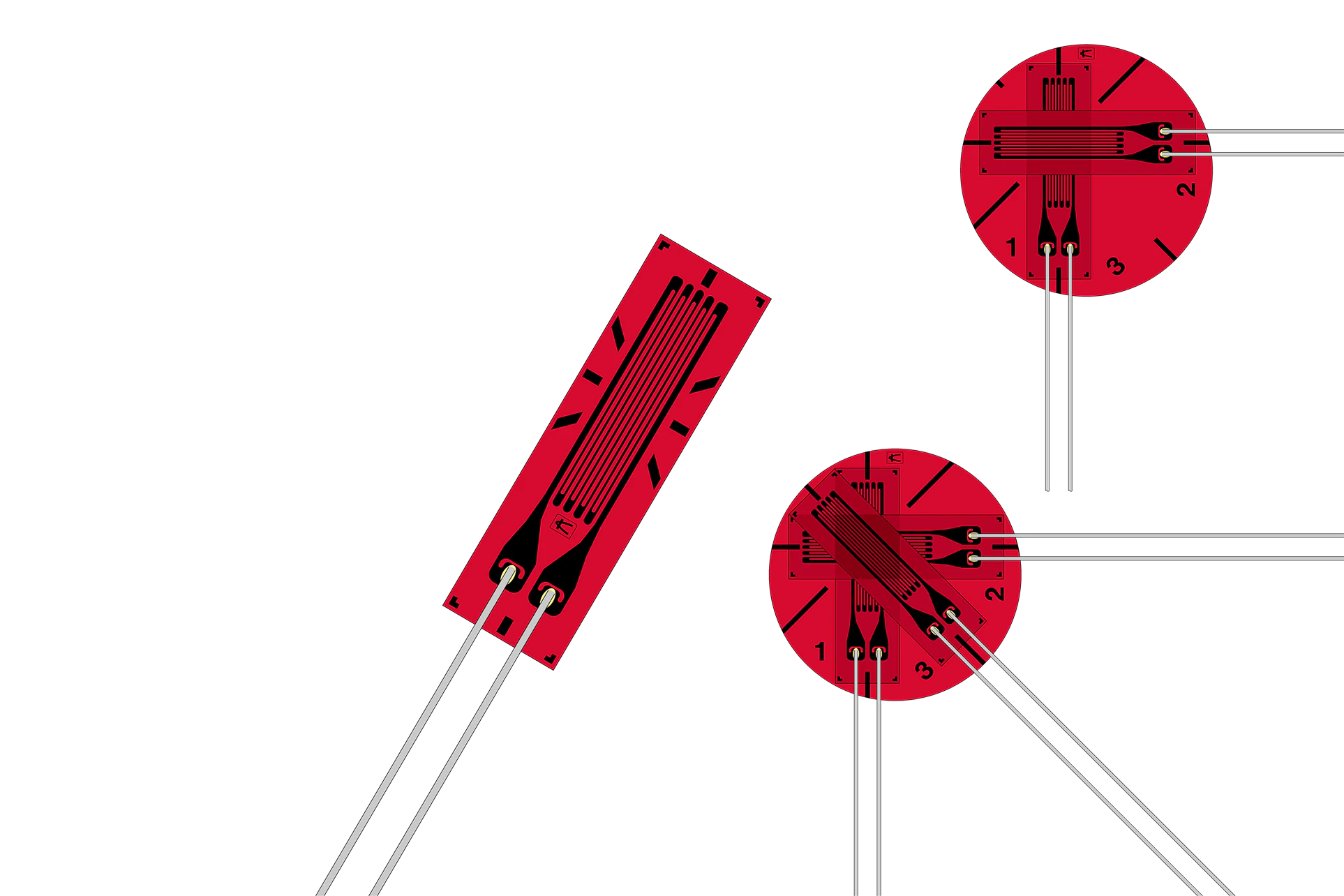
Prof. Sekiya: Another thing that I really like about KYOWA products is that there's a complete lineup of measurement products, from strain gages to data loggers. In addition to standard strain gages that are attached to structures, there are also measuring instruments that are embedded in concrete. The breadth and diversity of KYOWA's product lineup is a great advantage in the area of structural strain measurement.
I also really appreciate how often our KYOWA sales representative visits the research lab. I don't know exactly how often, but it's several times a month. KYOWA really listens to our concerns and requests, no matter how minor. It's also easy to discuss anything with our KYOWA representative, like talking with a friend. The relationship doesn't end once I've purchased a product. We continue to get close support even after the purchase, which is a great relief for me. At a research lab, I don't have the same people using the measuring instruments every time. Students come and go every year. KYOWA's close support really helps, and I'm very grateful for it.
Products that are even more "field-friendly"
Please share your future aspirations and what you hope to achieve through your research.
Prof. Sekiya: I want to establish "health check" techniques for social infrastructure, such as bridges, roads, and tunnels. That's my main goal. Accurate data measurement and data analysis are crucial to accomplish that, and we also need to know which parts of a structure are likely to break. We'll be seeing more and more infrastructure that's become deteriorated, and we'll be collecting information on these structures. I'd like to use that information to figure out what needs to be measured and what kind of analysis would be most effective, and continue to serve as a "social infrastructure doctor."
What are your expectations of KYOWA?
Prof. Sekiya: I'd like KYOWA to continue to expand its product lineup. In addition to working in my research lab, my research often has me in the field measuring the actual bridge, road, tunnel, or other structures. I'd like to see even more "field-friendly" products to make it even easier to take measurements in the field. For example, I'd like to see measuring instruments that are even lighter and easier to transport, or that won't suffer breakdown even if dropped in the field. KYOWA is always improving its products, so I believe this will happen.
Related Product


Please feel free to contact us if you have any problems with measurements or if you have questions about our products.


